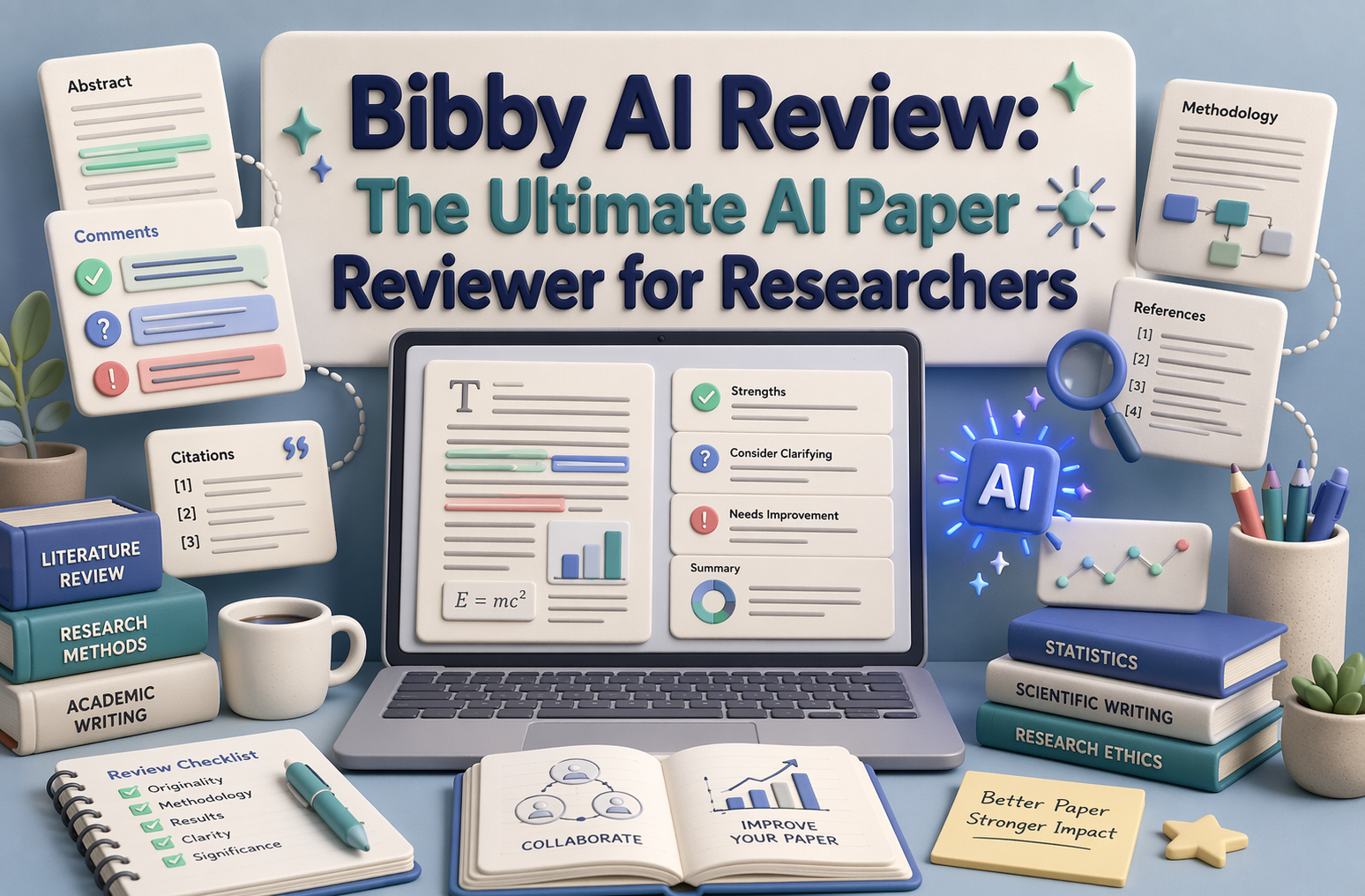
Quick Summary: Bibby AI is a comprehensive tool that combines paper review, citation search, LaTeX editing, and collaboration in one platform, reducing the need to switch between multiple apps. It is especially useful for researchers who write in LaTeX and want faster drafts, better review feedback, and streamlined citation management. However, it can feel overwhelming if you only need basic editing or prefer manual control. Overall, it is best for those seeking an all-in-one workflow to speed up writing and review processes.
If you write in LaTeX, Bibby AI tries to keep review, citations, and drafting in one place. That solves a common mess: too many tabs, weak pre-submission checks, and slow edits. In this Bibby AI review, I test whether this AI Paper Reviewer works as a real LaTeX Writing Assistant, not just another Research Paper Tools add-on. I also compare its core value, limits, and fit for researchers who need an AI Paper Reviewer they will actually use.
Table of Contents
- What Bibby AI does best for researchers
- How Bibby AI Paper Review works
- How it compares with major alternatives
- Pros and cons of using Bibby AI
- Is Bibby AI worth it for your research workflow?
- Frequently Asked Questions
- Conclusion
What Bibby AI does best for researchers
Bibby AI works best when you want review feedback and writing help in the same place. Its edge is simple: it combines paper review, citation search, and a native LaTeX workflow instead of splitting them across separate tools.

Structured paper review with venue-aware feedback
Bibby gives researchers a clear pre-submission check. Its AI Paper Reviewer scores novelty, clarity, technical quality, and impact, with venue-specific guidance for places like NeurIPS, ICML, and CVPR. You can run a full review before submission instead of guessing what reviewers will flag. See the features page for the full list.
A review tool inside a LaTeX editor
This is where Bibby feels more practical than many standalone review tools. Review, citation search, writing support, version history, and real-time collaboration all sit inside one editor, so you do not need to bounce between apps. You can also open Paper Review directly from the editor when a draft is ready.
Useful for drafting, not just critique
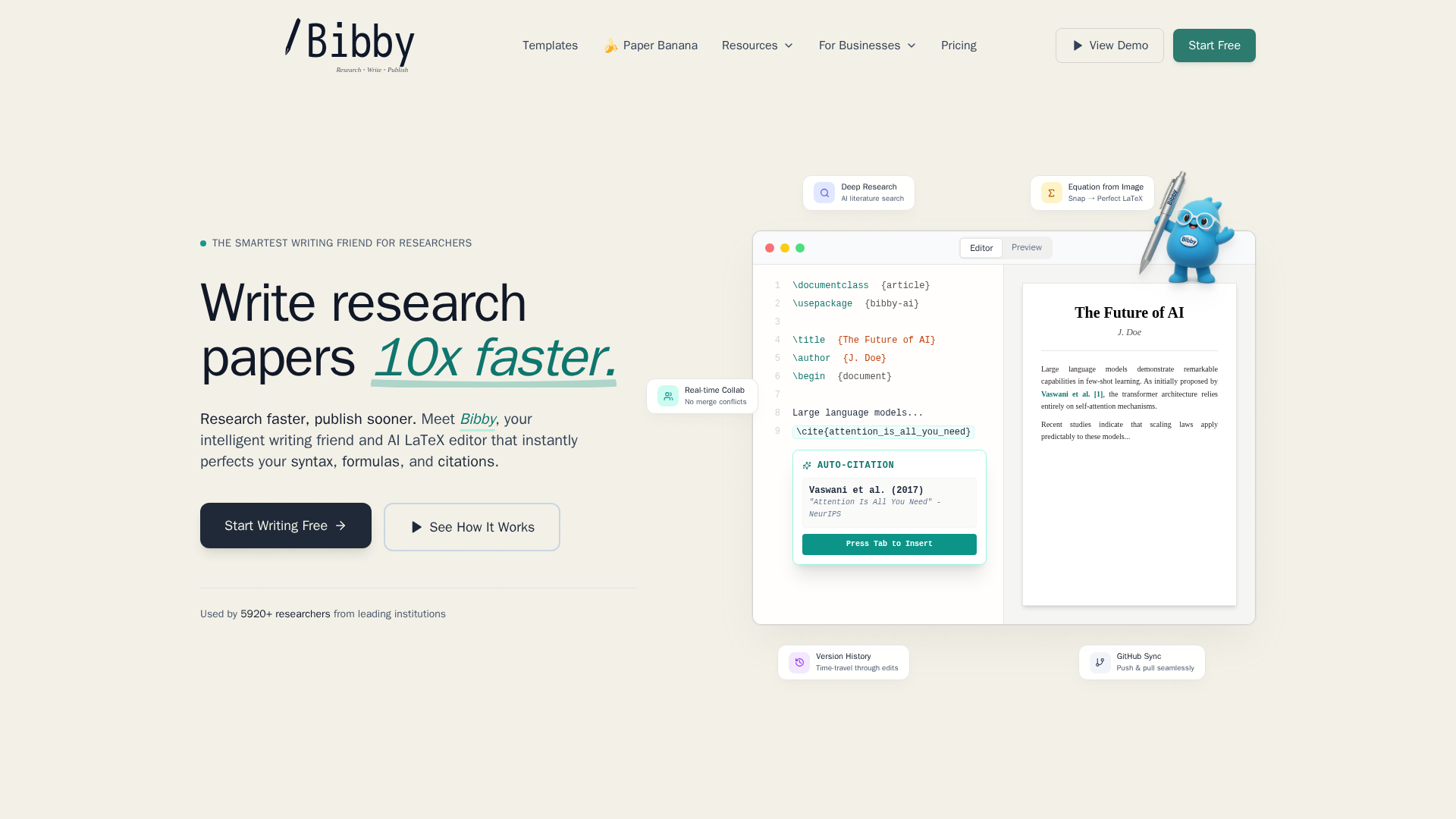
Bibby is not only for finding flaws. It also helps draft sections, fix LaTeX errors, insert citations, build tables, and turn equations from images into LaTeX. That makes it useful earlier in the writing cycle, not just right before submission.
How Bibby AI Paper Review works
Bibby AI Paper Review is a dedicated pre-submission tool built for researchers who want conference-caliber feedback without waiting weeks for human reviewers. It is included with Bibby Pro and works independently of the editor — upload a PDF, pick a venue, and get a structured report in minutes.
What Paper Review actually does:
- Upload your manuscript. Drop a PDF (up to 10 MB; the first 15 pages are analyzed). Your file stays private and is never shared.
- Select your target venue. Choose from 200+ conferences and journals — NeurIPS, ICML, ICLR, CVPR, ACL, AAAI, arXiv, and more. The reviewer tailors feedback to what that venue typically expects.
- AI analyzes your paper. Bibby reviews methodology rigor, writing clarity, novelty claims, missing citations, argument structure, and common rejection risks — the same dimensions human reviewers weigh.
- Get actionable feedback. You receive scores and specific suggestions you can act on: weak sections to rewrite, claims that need evidence, clarity issues, and formatting gaps. Download the report as a Word document when you are done.
Paper Review is designed as a first pass before human peer review — not a replacement for it. Use it to catch obvious weaknesses, tighten your narrative, and submit with more confidence.
Ready to try it? Open Paper Review and submit your draft for a venue-aware critique.
How it compares with major alternatives
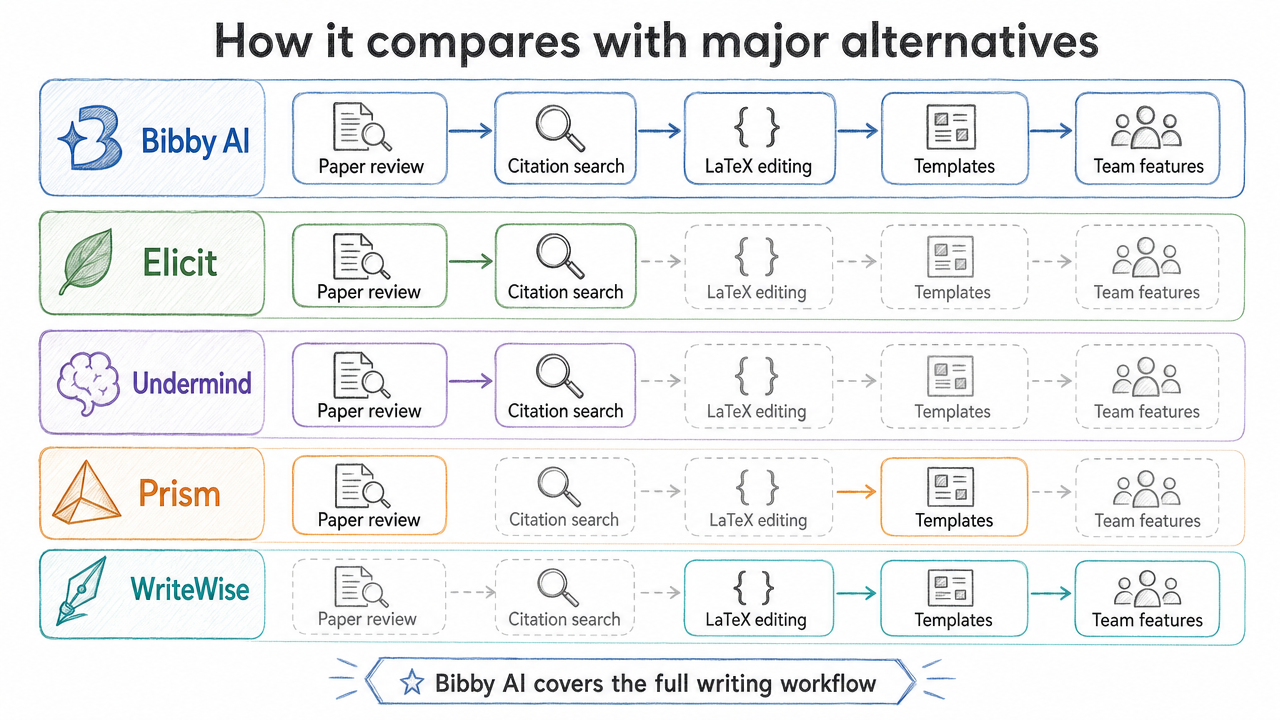
Bibby AI sits closer to an all-in-one writing workflow than most rivals. It combines paper review, citation search, LaTeX editing, templates, and team features in one place.
Against Elicit and Undermind
Elicit is strong for finding, screening, and summarizing papers at scale. Undermind is built for deep literature discovery and citation trails. Bibby AI is better if you want to move from search into drafting, editing, and submission prep without switching tools.
Against OpenAI Prism and WriteWise
OpenAI Prism has a strong LaTeX-native workspace with AI, citations, and real-time collaboration. WriteWise leans more toward academic drafting and revision help. Bibby AI stands out when you need both serious LaTeX work and review-focused features, plus equation-from-image and journal template depth.
Pick Bibby AI if your bottleneck is the whole paper workflow, not just search or polishing.
When a specialist tool may be better
Use Elicit or Undermind for heavy literature mapping. Use WriteWise if you mainly want guided drafting. Use Prism if free access matters most. Bibby AI fits best for researchers who want fewer tool handoffs and one tighter academic workspace.
Pros and cons of using Bibby AI
Pros
- Bibby AI keeps writing, citation search, paper review, and LaTeX editing in one place, which cuts tool switching. Its feature page also says it includes real-time collab, GitHub sync, version history, and 5,000+ templates inside one editor.

Cons
- The platform can feel like a lot if you only need basic editing.
- Some strong claims come from Bibby's own site and paper, so cautious researchers should test outputs themselves before trusting review scores or generated citations.
Who gets the most value
- PhD students juggling drafts, references, and revisions.
- Lab teams that co-write in LaTeX.
- Authors who want AI review plus citation help in one workflow.
Bibby works best if you still treat AI feedback as a first draft, not final judgment.
Is Bibby AI worth it for your research workflow?
Bibby AI is worth it if you want one place to draft, cite, review, and fix LaTeX. Its 2026 arXiv paper reports 91.4% error detection and 83.7% one-click fix accuracy on LaTeXBench-500, ahead of OpenAI Prism in that benchmark according to the paper.
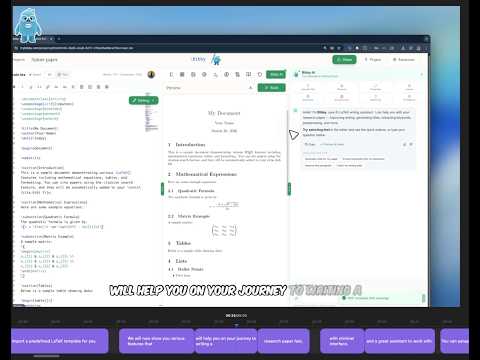
- Best fit scenarios: You write in LaTeX often, juggle citations, and want fewer app switches. Bibby AI fits PhD students, postdocs, and labs that need review help, collaboration, and built-in research tools in one editor.
- Who should look elsewhere: Skip it if you only need a plain text editor, already love TeXstudio, or want a non-AI workflow. Heavy manual-control users may not need Bibby's full stack.
Final verdict: Bibby AI looks strongest for researchers who value speed and fewer workflow breaks. Its own site also claims native citations, deep research, and GitHub sync in one workspace on the features page.
Ready to review, write, and format faster? Try Bibby AI or go straight to Paper Review to get venue-aware feedback on your next submission.
Frequently Asked Questions
Q1: What are the key features of Bibby AI that make it the top AI paper reviewer for researchers?
Bibby AI combines paper review, LaTeX editing, citation search, deep research, and team collaboration in one place. That matters because you spend less time switching tools and more time fixing arguments, references, math, and structure.
Q2: How does Bibby AI automate research drafting, formatting, and citation processes for academic researchers?
It helps draft sections, formats papers with journal templates, inserts citations fast, and supports equation building. This cuts manual work and helps researchers move from rough draft to submission-ready paper with fewer formatting errors.
Q3: What advantages does Bibby AI offer for international research teams collaborating on LaTeX manuscripts?
Teams can edit together, track version history, and sync with GitHub. That makes Bibby AI useful for cross-border projects where authors need shared control, clear change tracking, and a smoother LaTeX workflow without messy file handoffs.
Q4: How is Bibby AI Paper Review different from ChatGPT?
Paper Review is built for manuscripts: it reads your PDF structure, scores against venue-specific criteria, and returns a downloadable report with actionable sections. Generic chat tools lack venue templates, structured scoring, and a workflow designed for pre-submission checks.
Conclusion
Bibby AI works best for researchers who want review, writing, citations, and LaTeX in one place. Its arXiv paper and feature set support its edge as a more complete workflow tool. For the review feature specifically, try Paper Review on your next draft — upload a PDF, pick your venue, and see what reviewers might flag before you submit.
Get started: Run a Paper Review · Create a free Bibby account