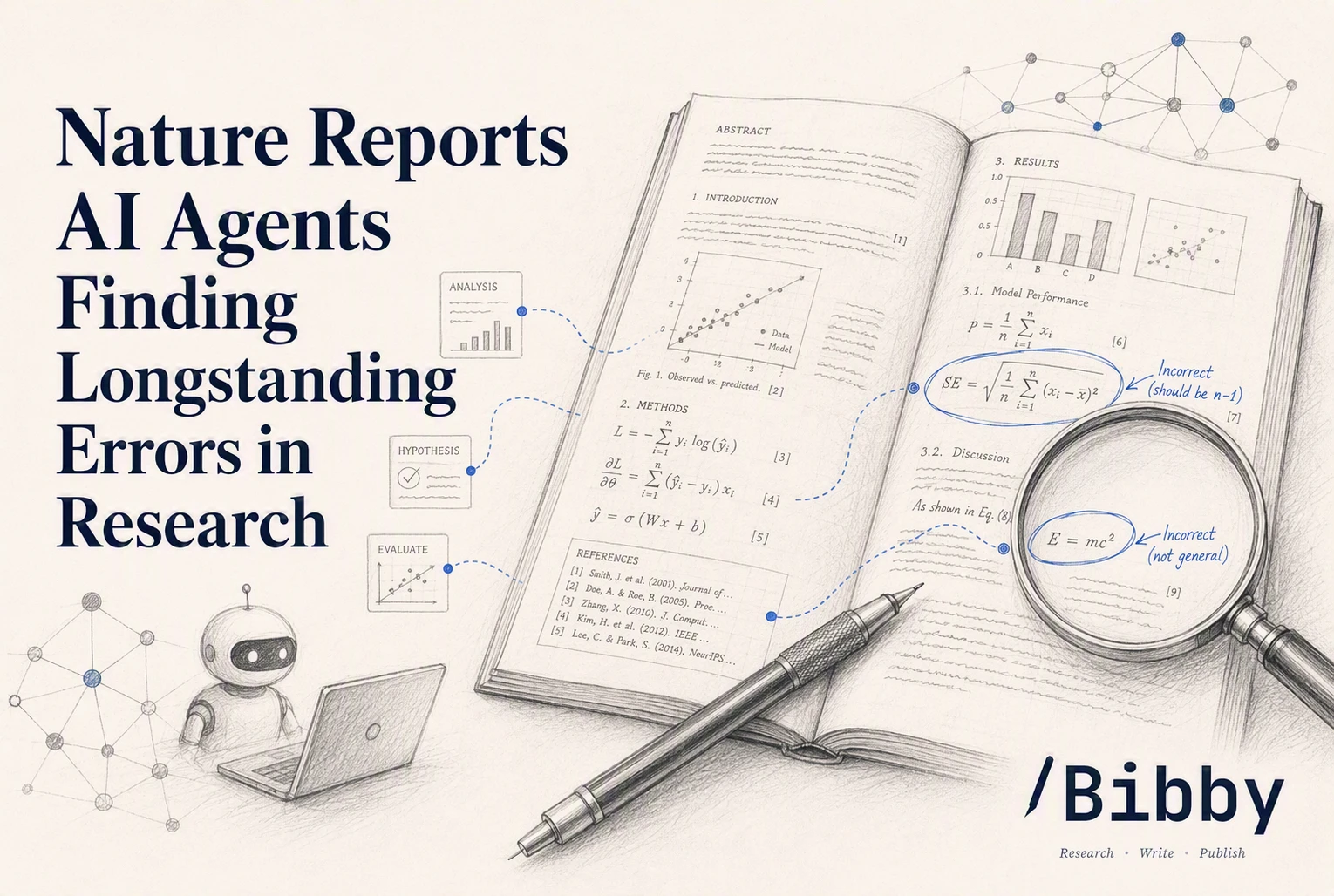
Quick Summary: An AI model spotted a 75-year-old wrong boiling-point value in a widely used chemistry database, which a researcher then confirmed by tracing back to the original flawed data. These tools can catch objective errors — like typos, unit mistakes, or calculation flaws — but only after humans verify the source and rerun checks. The Nature report warns that unchecked AI flags won’t fix science; they just highlight where experts need to dig deeper. Even in AI-heavy fields like machine learning, only 34% of papers fully reproduced their own claims, showing how easily errors slip through without rigorous follow-up.
AI agents are finding errors in research, not just summarizing papers. A 2026 Nature report says Sebastian Pios found boiling-point values wrong in a database used for about 75 years after an AI prediction raised a conflict. The review also covers agents spotting mistakes in AI papers. Such errors can mislead later work. This article examines AI agents finding errors in research, with human checks as the final safeguard.
Table of Contents
- The Chemistry Error That Started With an AI Disagreement
- From Suspicious Numbers to Audited Research Papers
- Replication Agents Show the Limits of Paper-Only Review
- Why Human Oversight Still Defines the Result
- Frequently Asked Questions
- Conclusion
The Chemistry Error That Started With an AI Disagreement
Why a Trusted Reference Value Was Reopened
A boiling-point model disagreed with a value in a chemistry database used for 75 years. The researcher first doubted the model. But Nature reports that a check of the source papers showed the database was wrong.

AI agents finding errors in research can flag conflicts that routine review misses.
The Human Check Behind the Finding
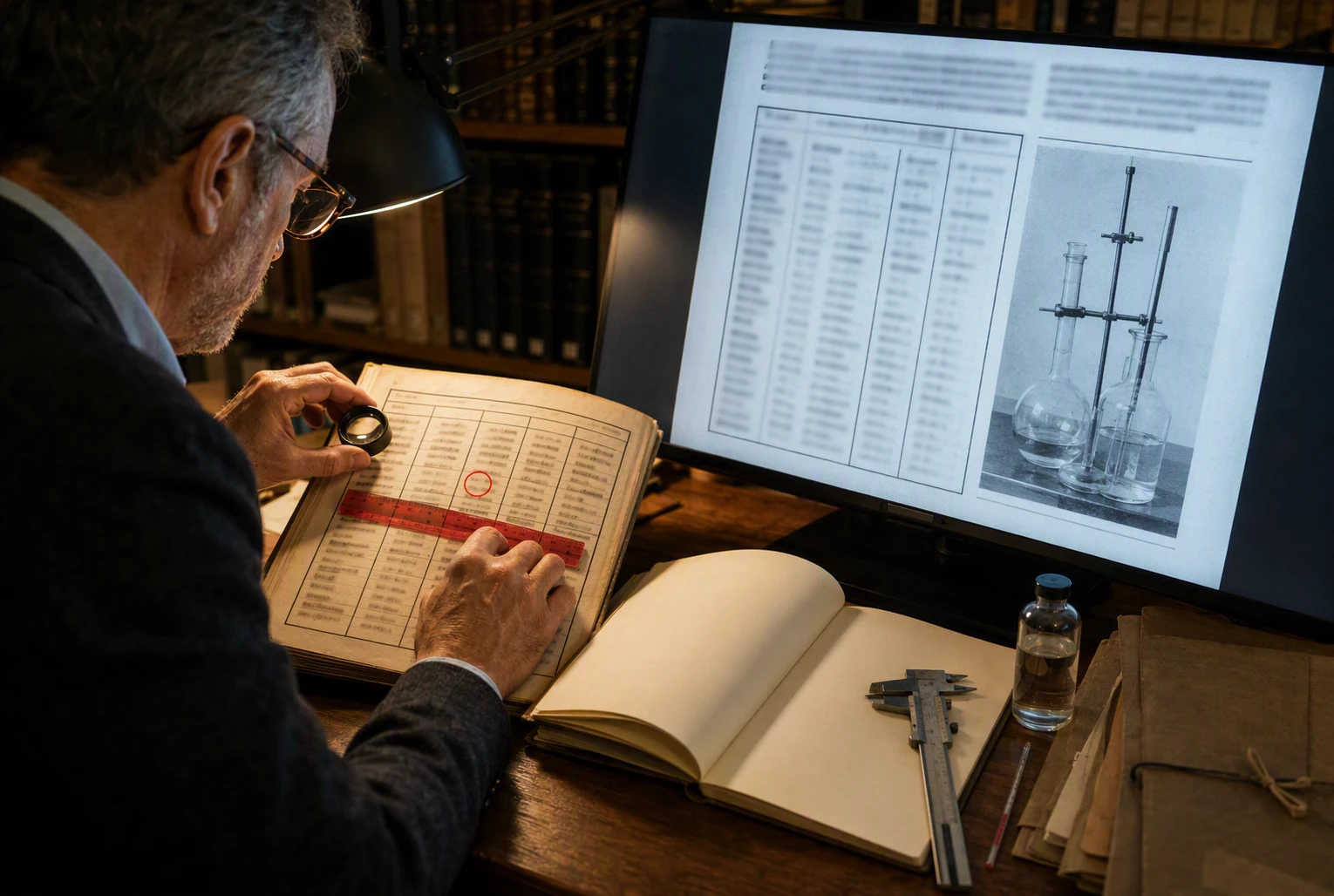
The model did not correct the record by itself. Sebastian Pios traced the value back to the original literature, where he found the error. It also flagged a typo and flawed old measurements.
Warning: Treat AI output as an audit lead, not a final verdict.
| Step | Purpose |
|---|---|
| Flag mismatch | Find suspect values |
| Check originals | Confirm the evidence |
AI agents finding errors in research need expert review. They work best as a second set of eyes.
Also Read: 10 Best LaTeX Equation Editor Tools (2026)
From Suspicious Numbers to Audited Research Papers
What Counts as an Objective Error
An objective error has a checkable right or wrong answer. It includes a wrong formula, calculation, figure label, unit, or copied value. AI agents can flag these conflicts, but a researcher must inspect the source and rerun the check. Nature reports agents finding incorrect boiling points, typos, and old measurement errors in trusted records.
| Error type | Human check |
|---|---|
| Formula mismatch | Recalculate from inputs |
| Data conflict | Trace the original source |
Treat an AI flag as a lead, not a correction.
Why Small Mistakes Matter to Cumulative Science
A bad number can spread through citations, databases, models, and lab plans. Later work may look sound while resting on a faulty input. Nature's report warns that these errors can make follow-on research shakier.
- Check units and source tables.
- Keep version history.
- Record every confirmed fix.
Also Read: 20 Common LaTeX Errors and How to Fix Them (2026 Guide)
Replication Agents Show the Limits of Paper-Only Review
What the Agents Actually Did
AI agents extracted claims, found code and data, reran tests where possible, then compared outputs with reported results. A Nature report found that only 34 of 92 assessed ICML papers reproduced more than two of five claims.
| Agent check | What it reveals |
|---|---|
| Code rerun | Missing files or unstable results |
| Claim comparison | Gaps between text and evidence |
Why Reproduction Failure Needs Interpretation
A failed rerun is not proof of fraud or a bad paper. It can reflect undocumented hardware, random seeds, data access, or a broken package. Reviewers should:
- Check whether inputs and versions are complete.
- Ask authors for missing details.
- Label the result as unverified, not false.
Agents scale checking. Human experts still judge whether a difference changes the scientific claim.
Also Read: More on the Bibby AI blog
Why Human Oversight Still Defines the Result
An AI agent can flag a mismatch. It cannot decide that a published value is wrong.
In the reported chemistry case, researchers checked the original papers before judging the reference data. That manual step turned a model alert into a defensible correction, according to Nature's report.
Use agents as a first-pass audit, then assign an expert to:
- Trace each claim to its primary source.
- Check units, formulas, and study conditions.
- Re-run calculations or experiments where possible.
- Record why the team accepts or rejects the alert.
| AI role | Human role |
|---|---|
| Finds anomalies at scale | Judges context and evidence |
| Repeats checks quickly | Owns the final scientific claim |
Warning: A confident AI output is not validation. It is a prompt to investigate.
Check equations, citations, and drafts before submission. Bibby AI helps your team write, format, and review research with confidence. Pair that with the AI paper reviewer so a human still owns the last call.
Frequently Asked Questions
Q1: Explain Nature's report on AI agents identifying longstanding errors in scientific literature.
AI agents can check formulas, data links, and cited claims at scale. Nature's report shows they may flag errors missed for years, but experts must confirm every finding.
Q2: Can AI agents correct a published paper?
No. Researchers should review the evidence, reproduce the check, and contact the journal with a clear correction.
Q3: How can labs use AI checks safely?
Use them before submission. Keep source data, log prompts, and assign a human reviewer for each flagged result.
Conclusion
AI agents can surface old errors at scale, including flawed chemistry data. But, as Nature reports, researchers must verify every flag against original evidence.